You are about to swap tokens on an unfamiliar network. The asset is on one chain, liquidity is on another, and the application asks for several permissions before it will complete a transaction. In a single-chain wallet, that situation often means changing networks, checking addresses manually, and hoping the interface has not hidden an important detail. A multi-chain wallet changes the workflow—but not the underlying risks.
That distinction matters. A wallet such as Rabby Wallet can make decentralized finance easier to inspect across networks, yet it cannot make a malicious contract safe, reverse a confirmed transaction, or eliminate the need for careful signing. The useful question is therefore not whether a multi-chain wallet is “safer” in the abstract. It is how its transaction simulation, chain awareness, account management, and warnings alter the decisions a user makes before committing funds.
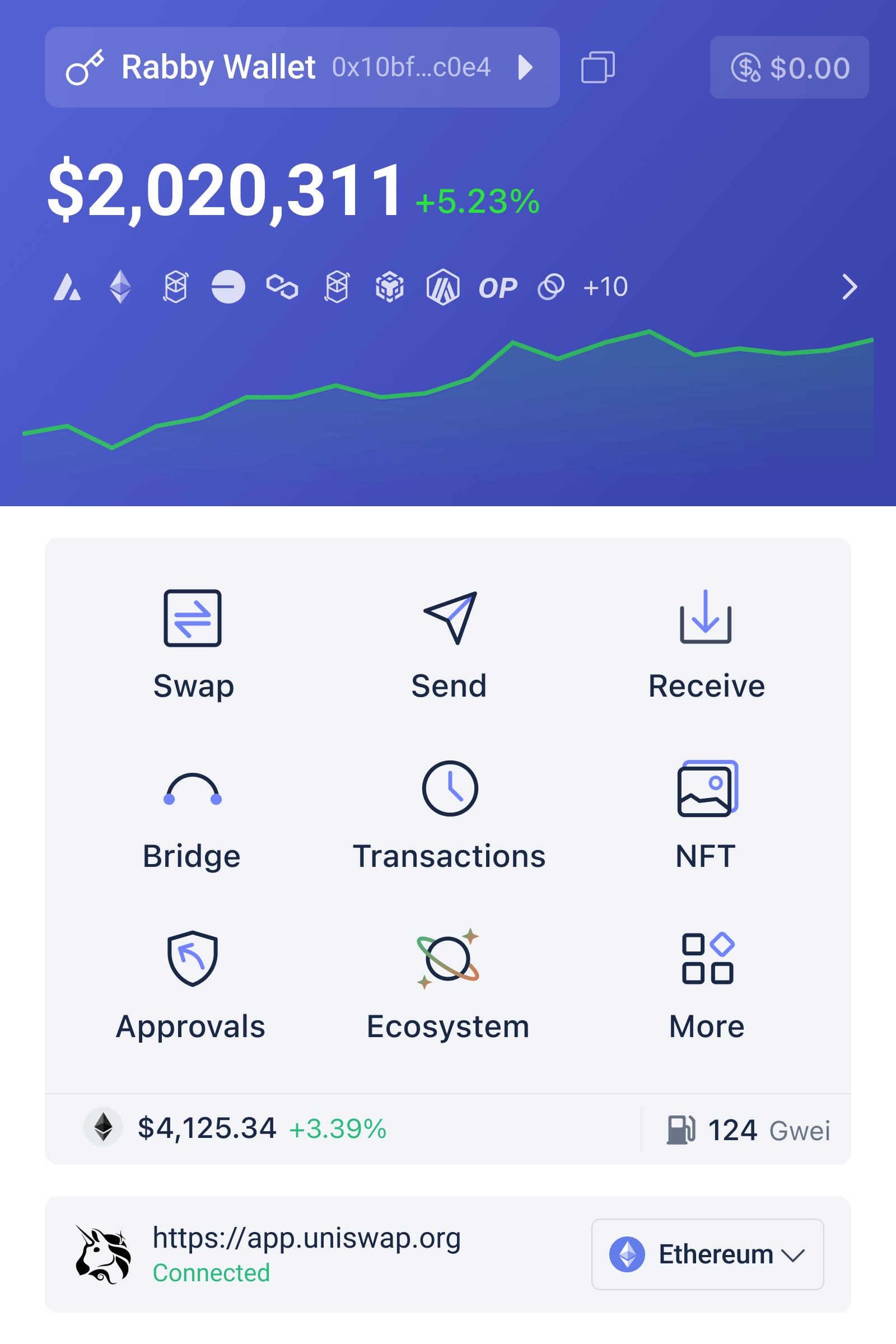
The first misconception: multi-chain does not mean one universal wallet
A blockchain wallet is best understood as a signing interface, not a vault that stores coins in one central place. The assets remain recorded on their respective networks. The wallet usually manages keys or provides access to them, derives addresses, displays balances, and signs messages or transactions when the user approves an action.
That model explains both the convenience and the limits of Rabby Wallet. A single account may be used across compatible networks, but each chain has its own state, fees, contracts, confirmation rules, and failure modes. A token balance visible on one network is not automatically spendable on another. Moving value between networks may require a bridge, an exchange, or an application-specific route. The interface can organize these differences; it cannot erase them.
This is the first practical correction to a common assumption: network switching is not the same as transferring funds. Selecting a different chain changes where a transaction is sent and which balance is relevant. It does not move an asset. If a user confuses those actions, a polished interface may still be unable to prevent an expensive mistake.
Why transaction simulation is more important than a long network list
Many wallets compete on the number of supported chains. For a DeFi user, that metric is less informative than the quality of transaction interpretation. A transaction is not merely a line of code waiting for a signature. It is an instruction that may approve token spending, transfer an NFT, interact with a lending market, or call several contracts in sequence.
Transaction simulation attempts to preview the likely result before the transaction is broadcast. Depending on the application and network, a user may see expected token movements, approvals, estimated fees, or warnings about suspicious behavior. This creates a more useful mental model: the wallet becomes a pre-flight inspection layer between the decentralized application and the user’s private key.
That layer is valuable because most damaging mistakes occur before confirmation. Users can overlook an unlimited token approval, misunderstand a permit signature, or approve a transaction on the wrong chain while focusing on a familiar-looking website. A readable preview can expose the mismatch between what the application says it is doing and what the contract call appears likely to do.
Still, simulation is not proof of safety. It depends on available chain data, the behavior of contracts, the state of the network, and the ability of the wallet to interpret a particular call. A malicious contract may behave differently under changing conditions, and a warning system can miss a novel pattern. Simulation reduces uncertainty; it does not reduce it to zero.
Rabby Wallet compared with other wallet approaches
Single-chain or minimalist browser wallets
A minimalist browser wallet can be attractive because it is familiar, lightweight, and widely supported by decentralized applications. For users who remain on one ecosystem and understand each contract interaction, simplicity may be a genuine advantage. Fewer panels and alerts can mean less friction.
The trade-off is that the user may have to perform more of the analysis manually. Network context, token balances, approvals, and contract outcomes can be scattered across application screens or external explorers. A multi-chain wallet with richer pre-transaction information may improve orientation, but it also introduces more interface complexity. More information helps only when the user knows which signals deserve attention.
Hardware wallets
A hardware wallet protects private-key operations by keeping key material in a dedicated device. That is a different security layer from a browser extension. Hardware signing can reduce exposure to malware that attempts to extract keys from a computer, but it does not automatically make a transaction economically sensible. If the user approves a malicious contract call on the hardware device, the device can faithfully sign the mistake.
For larger balances or long-term holdings, pairing a browser interface with hardware signing can be a reasonable separation of roles: the browser helps explain the transaction, while the hardware device controls final authorization. The cost is additional setup, device management, and potential incompatibility with some applications. Convenience and key isolation are not the same objective.
Exchange custodial accounts
A US-based user may already hold crypto on a centralized exchange. Custody there can simplify account recovery, fiat conversion, and support. The exchange also handles private-key operations on the customer’s behalf. Yet the user gives up direct control over on-chain signing and may face withdrawal limits, network restrictions, or platform-specific risk.
A self-custodial multi-chain wallet offers more direct control and broader composability, but the responsibility shifts sharply. Seed phrases, approvals, phishing resistance, and transaction review become the user’s obligations. The comparison is not simply “safe versus unsafe.” It is delegated control versus personal control, each with different failure modes.
How to install and use a browser extension without treating installation as security
Users interested in setting up the rabby wallet extension should treat installation as the beginning of a security process, not its conclusion. The critical checks are basic but consequential: obtain the software from a source you trust, verify that the extension and website are genuine, create or import an account only in the intended environment, and never share a seed phrase or private key with a website, support agent, or application.
After installation, begin with a small balance and a low-stakes transaction. Confirm the active account, network, recipient, token, and fee before signing. When an application requests an approval, ask what the approval permits and whether it can be limited. A wallet may show a warning, but the user still has to interpret the warning in context.
Seed phrases deserve special emphasis. They are not passwords that a legitimate wallet provider can reset or recover for you. Anyone who obtains the phrase can generally recreate the account elsewhere. Store it offline, avoid screenshots and cloud notes, and be suspicious of unsolicited requests to “validate” or “synchronize” it. A multi-chain wallet can expose one account to many applications, which increases convenience and also increases the importance of compartmentalization.
The non-obvious risk: one account can expand the blast radius
Multi-chain access often encourages users to reuse the same address everywhere. That is convenient, but it can create a broader operational footprint. If the same account interacts with experimental bridges, unfamiliar token launches, lending markets, and NFT contracts, a mistake in one setting may leave approvals or signatures that matter later in another setting.
Separate accounts can therefore be more useful than simply adding more networks. One account might hold long-term assets, another might be used for routine DeFi activity, and a third might be reserved for testing unfamiliar applications. This does not create perfect safety—users can still sign the wrong transaction—but it limits the potential damage when an account is exposed to a risky contract or an address is compromised.
There is a further boundary condition: cross-chain systems often rely on bridges or messaging layers with their own assumptions. A wallet can display a bridge transaction clearly while having no authority over the bridge’s validators, contracts, liquidity, or recovery process. The interface improves user comprehension; it does not inherit the security model of every protocol it supports.
A reusable decision framework for DeFi users
Before approving a transaction, separate four questions that are often collapsed into one. First, is this the correct application and domain? Second, is the account and network correct? Third, do the transaction effects match the action described by the application? Fourth, is the protocol itself acceptable given its contract, governance, liquidity, and bridge risks?
This framework prevents a common category error: assuming that a wallet warning answers a protocol-risk question. Wallet software can help identify a suspicious recipient or unexpected token movement. It cannot establish that a new yield strategy is economically sustainable, that liquidity will remain available, or that a smart contract has no undiscovered vulnerability.
Watch for the practical signals that change the quality of a decision: unexplained approvals, a recipient address that differs from the expected one, a network mismatch, unusually high fees, an unexpected permission request, or a transaction whose result cannot be explained in plain language. If the action is difficult to describe, pausing is often more rational than rushing to capture a short-lived opportunity.
What to expect from the multi-chain wallet model
If wallets continue to improve transaction interpretation, the most important development may not be support for yet another network. It may be better abstraction: clearer explanations of contract calls, more consistent risk signals, and fewer opportunities for an application to hide complexity behind a single “Confirm” button. That would make wallet design part of financial education, because the interface would teach users to distinguish approvals, transfers, swaps, and signatures.
The limitation is that better interfaces can create overconfidence. When software presents a clean risk score or a reassuring simulation, users may treat it as a verdict rather than an estimate. The strongest workflow remains layered: verify the application, inspect the proposed effects, use appropriate account separation, protect the signing key, and understand the protocol beyond the wallet screen.
Frequently asked questions
Is Rabby Wallet only for advanced DeFi users?
No. Its transaction explanations and network context can help newer users, but the interface cannot replace basic knowledge of addresses, approvals, gas fees, and self-custody. Beginners should start with small amounts and simple transactions.
Does a multi-chain wallet move funds between networks automatically?
No. It can help you access applications on multiple networks and may display balances across supported chains, but transferring value usually requires a bridge, exchange, or other mechanism. Each route has separate fees, liquidity, and security assumptions.
Can wallet simulation guarantee that a transaction is safe?
No. Simulation is a useful preview of expected effects, not a guarantee. It may depend on available data and may not capture every contract behavior, economic risk, or future change in protocol conditions.
Should long-term holdings use the same account as experimental DeFi activity?
Usually, separating those activities is a prudent risk-control practice. Distinct accounts can reduce the potential blast radius of a compromised approval or a harmful interaction, although they do not eliminate the need to verify every transaction.
The best way to judge a multi-chain wallet is not by how many chains appear in its menu. Judge it by whether it helps you understand what you are signing, where the transaction will execute, and which risks remain outside the wallet’s control. Used that way, Rabby Wallet is not a magic shield. It is a decision-support layer—and its value depends on whether the user continues to think critically before pressing confirm.